Case Study
Ebbw Vale Literary and Scientific Institute
“When Winston Churchill declared that he had nothing to offer but ‘blood, toil, tears and sweat’, he could almost have been describing nineteenth-century Ebbw Vale.“
So wrote local historian Idwal Williams when reflecting on the town’s industrial past in his book, Then & Now: Ebbw Vale. It is a fitting description. Few places embodied the sacrifices and achievements of industrial Britain more completely than Ebbw Vale. In little more than half a century, a remote pastoral landscape of sheep farms and mountain ponies was transformed into one of the most important iron-producing districts in the world. Thousands of migrants poured into the valley in search of work, furnaces lit the night sky, and the fortunes of entire families became tied to the relentless rhythm of the ironworks.
Amid the smoke, noise and hardship, however, another story was unfolding. It was not a story of iron, coal or machinery, but of books, newspapers and self-improvement. In 1853, the Ebbw Vale Literary and Scientific Institute opened its doors, offering working people access to knowledge on a scale previously unknown in the district. More than a library, it became a symbol of Victorian faith in education and a focal point for one of the most ambitious social experiments in industrial Wales.
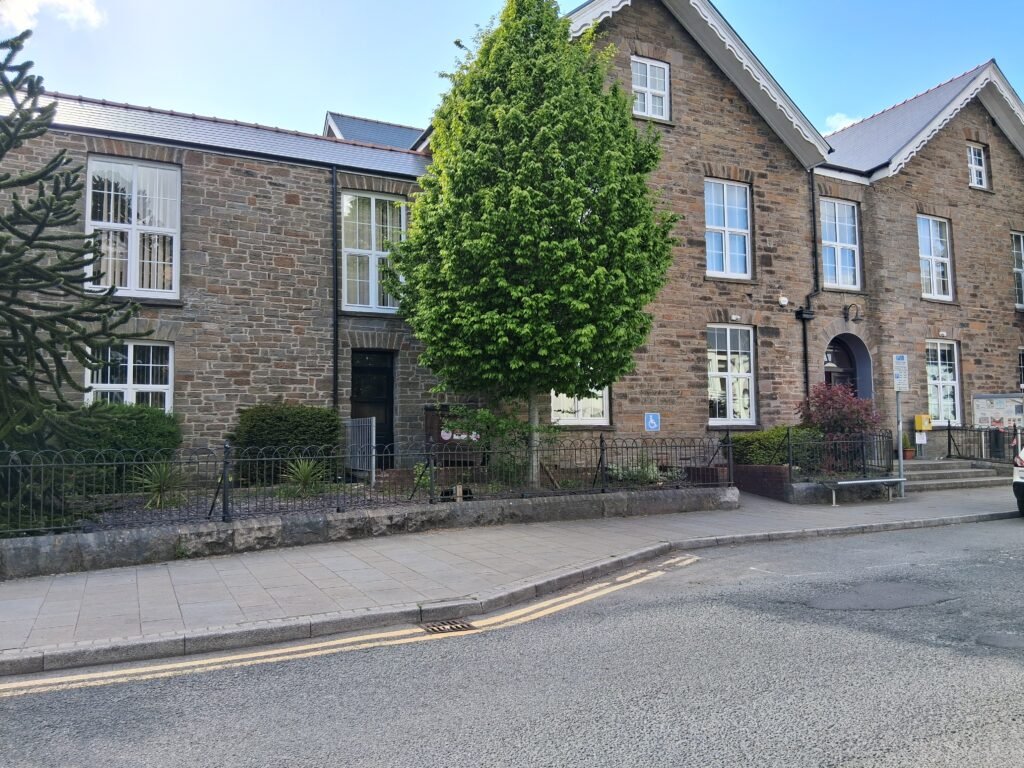
As it stands in 2026. Ebbw Vale Institute (EVI) – a grade II listed building and the oldest surviving institute in Wales. Photograph: Author’s own.
The story of the institute reveals how a community once condemned as ignorant, disorderly and dangerous came to embrace learning, debate and intellectual advancement. It also challenges a common assumption about Victorian philanthropy. The institute was not simply a gift bestowed upon grateful workers. Its origins lay in the efforts of the workers themselves.
A town built almost overnight
Before the arrival of the iron industry, Ebbw Vale was little more than a rural landscape of farms, sheep and mountain ponies. Everything changed with the rapid expansion of ironmaking at the end of the eighteenth century. The growth was breath-taking. The parish of Aberystruth, which encompassed much of what became Ebbw Vale, contained only around 805 people in 1801. By 1851 that figure had risen to more than 14,000, an increase of over 1,600 per cent in just fifty years. Workers arrived from across Wales, England, Scotland and Ireland. Drawn by employment at the Ebbw Vale Ironworks and neighbouring industrial concerns, they transformed a remote valley into a hive of furnaces, collieries and workers’ housing.
Yet rapid growth brought challenges. The community was largely made up of newcomers with different backgrounds, languages and traditions. Historian James Vernon has described many such industrial districts as “societies of strangers”, places where populations were assembled by industry rather than by long-established local ties. Ebbw Vale was one of the most striking examples. To outside observers, these industrial settlements often appeared unstable and potentially dangerous. Memories of the Newport Rising of 1839 and the Chartist movement remained fresh, while the social unrest of the Rebecca Riots lingered across Wales.
The verdict of the Blue Books
In 1847, the government published the controversial Reports of the Commissioners of Inquiry into the State of Education in Wales, later known simply as the Blue Books. Their verdict on the industrial districts of south Wales was devastating. Commissioner Jelinger Symons portrayed communities such as Ebbw Vale as places of ignorance, drunkenness and moral decline. Workers were described as “strangers”, disconnected from traditional society and vulnerable to vice and disorder. The report’s conclusions were so hostile to Welsh communities that they would become remembered as Brad y Llyfrau Gleision, the “Treachery of the Blue Books”.
Today, the report is often criticised for its prejudice and cultural arrogance. Yet it reveals how many Victorian observers viewed industrial communities. To the governing classes, places such as Ebbw Vale appeared to require both educational and moral reform. Within a few years, however, the people of Ebbw Vale would begin providing a powerful challenge to these assumptions.
The workers who demanded education
The conventional story of the Institute focuses on Thomas Brown, manager of the Ebbw Vale Ironworks and the man who financed the building. While Brown’s contribution was undoubtedly important, the story really begins elsewhere.
It begins with the workers themselves.
In 1849, local workmen and farmers began meeting in the vestry of Old Penuel Chapel with the aim of establishing a Mutual Improvement Society. Their objective was simple yet ambitious: education. This movement emerged independently of employers or government officials. It reflected a genuine hunger for knowledge among ordinary working people. Members met to discuss ideas, exchange books, deliver papers on subjects of interest and engage in the kind of self-education that was becoming increasingly popular across Victorian Britain.
The timing was significant. Britain was entering the age of Samuel Smiles and the philosophy of self-help. Working-class readers across the country were embracing the belief that education and determination could improve their lives. The society quickly became a victim of its own success. By 1851 its accommodation was proving inadequate. Committee reports complained of overcrowding and insufficient space for books. The organisation had outgrown the chapel that had nurtured it. The members therefore appealed directly to Thomas Brown for assistance.
Enter Thomas Brown
Brown’s response was decisive. In 1853, he financed the construction of the Ebbw Vale Literary and Scientific Institute at a cost of approximately £3,000. The new building included classrooms, a lecture hall, a library and, most importantly, a reading room. The Institute was no modest undertaking. It was the first major public building in Ebbw Vale and represented a statement of confidence in the town’s future.
Brown’s actions reflected a broader Victorian belief known as paternalism, the idea that wealthy employers had a duty to improve the lives of those who worked for them. Yet the Institute was not simply imposed from above. It existed because local people had already demonstrated that they wanted it. In many respects, Brown supplied the building, but the workers supplied the demand.
A battle for leisure
Victorian reformers believed that leisure mattered. Many worried that free time spent in public houses encouraged drunkenness, gambling and political radicalism. Reading rooms offered an alternative. They were intended to provide what reformers called “rational recreation” – the improvement of mind and character through education. The Institute’s rules reveal these ambitions clearly. Members were expected to observe “perfect silence” in the reading room. Books and newspapers were carefully regulated. Every proposed addition to the library required committee approval. Access to knowledge came alongside expectations about behaviour.
Yet these rules did not deter members. On the contrary, attendance grew steadily. The Institute’s records show that demand for books was strong from the beginning. More than 320 volumes were borrowed during its first year. Within a year that figure had more than doubled to 655. Membership expanded, library holdings increased and new publications were added in response to popular demand. The evidence suggests that Ebbw Vale’s workers were not reluctant participants in an elite improvement project. They actively embraced it.
What did they read?
The reading room’s shelves reveal a fascinating glimpse into Victorian intellectual life. Members had access to The Times, The Illustrated London News, Punch, The Athenaeum, Dickens’ Household Words and a variety of educational and scientific publications. Importantly, the institute also responded to local demand for Welsh-language literature. Publications such as Yr Amserau and later Y Traethodydd were introduced at the request of subscribers.
This is significant because it demonstrates that the relationship between management and membership was not entirely one-sided. Readers were not passive recipients of knowledge. They influenced the Institute’s development and shaped its collections. Far from being a rigid instrument of social control, the reading room became a space of negotiation between those who provided resources and those who consumed them.
More than social control
Was the Institute designed to create a respectable workforce? Undoubtedly. Was it also a genuine opportunity for self-improvement? The evidence suggests it was. Annual reports repeatedly emphasised the enthusiasm with which members borrowed books and attended the reading room. One report celebrated the “desire for mental culture” displayed by subscribers. Another noted the constant demand for books and the care with which they were treated.
These are not the actions of people being dragged reluctantly toward education. The Institute succeeded because it met a real need. For workers who spent their days in furnaces, mines and workshops, the reading room provided access to newspapers, literature, science and ideas from beyond the valley. It created opportunities that simply had not existed a generation earlier.
A lasting legacy
The Ebbw Vale Literary and Scientific Institute did not transform every resident into a scholar. Many workers never became members, and public houses remained central to community life. Economic hardship also limited participation, particularly during periods of industrial decline. Yet judging the Institute solely by membership figures would miss its wider significance.
Its greatest achievement was symbolic. In a town built for iron production, it created a space dedicated to intellectual development. It challenged the caricature of industrial workers as ignorant and uninterested in education. Most importantly, it demonstrated that the desire for learning was already present among the people of Ebbw Vale long before philanthropists and reformers arrived to encourage it.
The Institute remains standing today because it represented something larger than a library or lecture hall. It embodied a belief that working people deserved access to knowledge, culture and self-improvement. In the shadow of the furnaces, Ebbw Vale’s workers built more than rails and iron. They built a community that believed education mattered.
Sources and Further Reading
This article draws upon material from the Ebbw Vale Literary and Scientific Institute Minute Books held at Gwent Archives, together with archival material from the Richard Burton Archives, Swansea University. Secondary works include Barrie Caswell, John Gaydon and Mel Warrender’s Ebbw Vale “The Works”: 1790–2002; Jonathan Rose’s The Intellectual Life of the British Working Classes; Samuel Smiles’ Self-Help (1859); David Roberts’ Paternalism in Early Victorian England; James Vernon’s Distant Strangers: How Britain Became Modern; and the Reports of the Commissioners of Inquiry into the State of Education in Wales (1847).